
Questions and answers on packaging and production
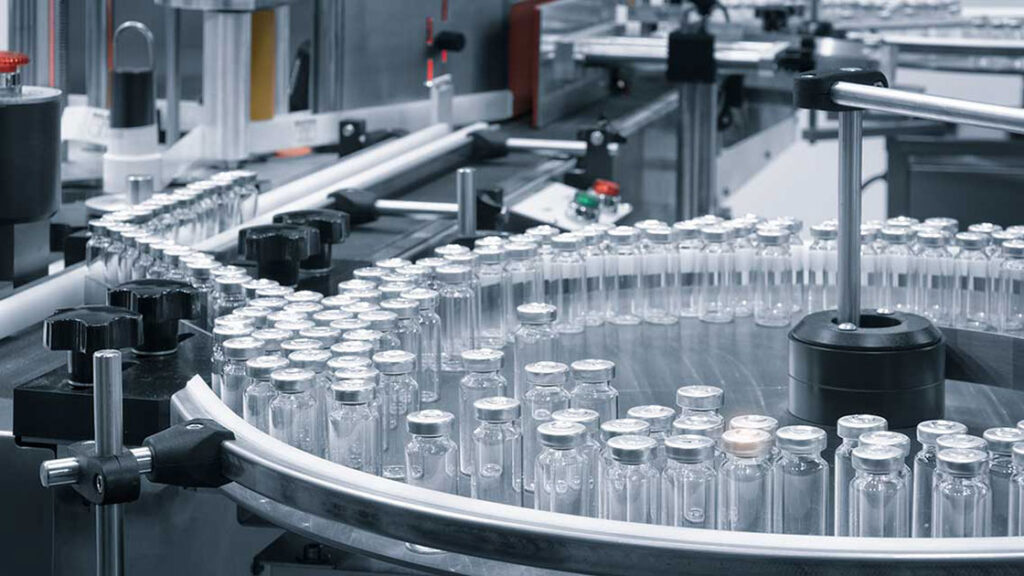

Modern pharmaceutical production and GMP-compliant packaging solutions for small and large batches, with a focus on quality and efficiency.
Our high-end secondary packaging includes GMP-compliant, fully automated and modularly scalable processes for a wide range of diverse batch sizes, from clinical trial samples to large-scale production runs. We integrate state-of-the-art automation, serialisation, sustainable materials, and maximum flexibility to meet individual requirements.
We process small and micro batches just as efficiently as standardised large batches. Our modular facility architecture enables flexible adaptation to individual project volumes – from single projects to full-scale series production.
Yes we specialise in GMP-compliant packaging of clinical trial medication. We handle the entire packaging and labeling process, as well as the logistical preparation for clinical studies – tailored, on schedule, and fully compliant with regulatory requirements.
As a CDMO, we handle secondary manufacturing, packaging and labelling, serialisation, and, upon request, we can also manage the market release of your products. In addition, we support you with product launch, storage, and distribution in compliance with EU GMP standards.
Secondary packaging includes all packaging steps that occur outside of direct contact with the active ingredient or pharmaceutical product – e.g., placing blisters into folding cartons, labelling, inserting package leaflets, sealing, coding, or serialisation. It is essential for product protection, traceability, and patient-friendly use – particularly during product launches, clinical trials, or international distribution.
Primary packaging: The direct packaging of a pharmaceutical product that comes into contact with the product itself – for example, tablet blisters, injection vials, or drip bottles. It protects the product physically and chemically.
Secondary packaging: The outer packaging that contains the primary packaging – such as cartons, outer boxes, labels, or package inserts. It serves to provide information, ensure safety, and facilitate logistics.
Both types of packaging are subject to strict regulatory requirements.
Regulations, processes and details
We also produce small batches for clinical trials or pharmacies!
Complex Pharma consistently structures all processes according to current GxP guidelines. Our quality management teams and Qualified Persons oversee compliance with regulatory requirements across all relevant areas with great care.
Serialisation is the unique, machine-readable identification of each individual pharmaceutical product package using a serial number. It is legally required in the EU (EU Falsified Medicines – Directive 2011/62/EU) and serves to ensure protection against counterfeiting, traceability, and patient safety. Complex Pharmaceuticals provides fully automated serialisation solutions, including integration with national and European databases (e.g. EMVS).
Yes – we support both pharmacies and hospital pharmacies with tailored packaging solutions, particularly for individual batches, special formats, or short-notice supply requirements.
Our combination of modern production, advanced technological capabilities, regulatory expertise and a strategic location makes us unique. We offer not only capacity, but also consulting, speed, and a high level of customer focus – even for complex requirements.
Our secondary packaging is based on recyclable materials, CO₂-efficient technology and resource-saving process control. For us, sustainability is not an add-on, but an integral part of our value creation.
Rare diseases, also known as “orphan diseases,” are defined according to their frequency – however, this definition varies around the world. In Europe, a disease is considered rare if it affects fewer than 5 in 10,000 people. Around 30 million people in Europe and approximately 400,000 in Austria suffer from one of the 6,000 known rare diseases. Of these, 80% are genetic, while the remaining 20% result from infections, allergies, or environmental factors.
The PRRC – Person Responsible for Regulatory Compliance – is a legally required expert in companies who, under the EU Medical Device Regulation (MDR) and the In Vitro Diagnostic Regulation (IVDR), is responsible for ensuring that regulatory obligations are met.
Key tasks include:
- Ensuring that Products are manufactured according to the quality management systems
- Verification of the declaration of conformity and technical documentation
- Monitoring of market observation and feedback systems
The PRRC must be professionally qualified and permanently employed by the company. Although primarily required for medical devices, many pharmaceutical enterprises – particularly in the case of combination products – align with this role to ensure regulatory compliance.
ISO 13485 is an internationally recognised standard for quality management systems in the medical device industry. It defines requirements to ensure the safety, quality and effectiveness of medical devices and related services throughout the entire product life cycle.
Key aspects include:
- Risk-based quality management
- Risk-based quality management
- Validation of processes and software
- Corrective and preventive measures
- Control of outsourced processes and suppliers
Although ISO 13485 is specifically aimed at medical devices, many pharmaceutical companies also align with this standard – particularly if they manufacture combined products (e.g. pharmaceutical products with application systems) or work closely with MedTech partners.
GxP is a collective term for all regulatory guidelines and quality standards in the pharmaceutical and biotechnology industry which ensure that products are manufactured, tested, stored and distributed in a safe, effective and traceable manner.
The “G” stands for Good, the “P” for Practice – the “x” acts as a placeholder for the respective area of application, for example:
- GMP – Good Manufacturing Practice
- GLP – Good Laboratory Practice– Good Laboratory Practice
- GCP – Good Clinical Practice
- GDP – Good Distribution Practice
These regulations apply throughout the European Union on the basis of binding regulatory frameworks such as:
- the EU GMP Guidelines (EU Guidelines for Good Manufacturing Practice, part of EU licensing law)
- the ICH Guidelines (e.g. ICH Q7 for active ingredients, Q9 for quality risk management)
- as well as specific guidelines in accordance with EU regulations (e.g. Guideline (EU) 2017/745 on medical devices)
GxP requirements include, among other things:
- complete documentation and traceability of all processes
- Validation of manufacturing and testing systems
- Responsibilities of Qualified Persons (QPs)
- consistent training and qualification of staff
- as well as a robust quality management system
Complex Pharmaceuticals complies with all relevant GxP Standards and aligns all processes with the European and international regulatory requirements. In this way, we ensure that our services – from secondary packaging to market release – meet the highest quality standards and are recognised worldwide.
The Qualified Person (QP) is a legally required key role in the pharmaceutical industry. The QP is responsible for approving pharmaceutical products for release or distribution and ensures that each individual product has been manufactured, tested and released in accordance with applicable legislation.
Legal basis in Austria:
In Austria, the Qualified Person (QP) is defined in § 2 No. 21 of the Medicinal Products Act (AMG). According to § 63 AMG, any pharmaceutical company that manufactures or imports medicinal products must have at least one Qualified Person who is responsible for the release of each individual batch. The requirements regarding education and professional experience are legally regulated and closely aligned with EU law.
Legal basis in the EU:
At the European level, the QP is defined in Article 48 of Directive 2001/83/EC (common legal framework for medicinal products for human use). The Qualified Person is obliged to release each batch in accordance with the requirements of the EU GMP Guidelines (Annex 16) – and only if:
- manufacturing has been carried out in accordance with the approval and GMP requirements,
- all required testing has been completed,
- and the results meet the required quality standards.
A QP-release statement is a mandatory requirement for the market launch of a medicinal product within the EU.
Qualification and responsibility:
Qualified persons usually hold a university degree in pharmacy, chemistry, or related natural sciences and have several years of professional experience in a GMP-regulated environment. They hold personal, legally accountable responsibility – particularly for quality, compliance and patient safety.
At Complex Pharmaceuticals, qualified persons with extensive experience and comprehensive regulatory expertise, handle the market release – ensuring the highest levels of safety, quality and compliance at the European level.
Any further questions?


OFFICE
Complex Pharmaceuticals GmbH
Storchengasse 1
1150 vienna | Austria

PHONE
Office hours
Mo to Fr. 09:00 to 18:00 o’clock
Tel: +43 1 208 01 34