
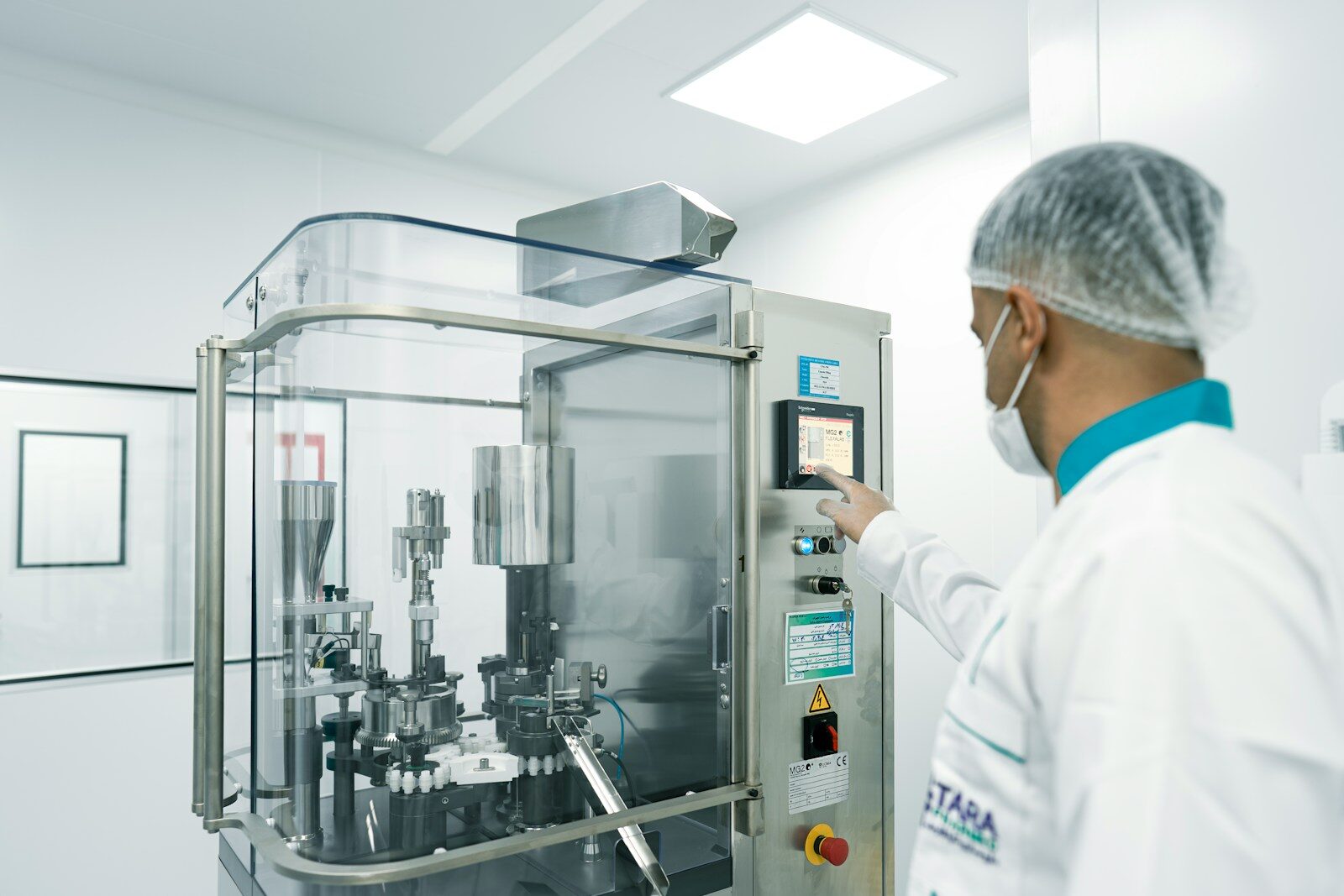
Technology, processes and people: the foundations of high-performance pharmaceutical manufacturing
An outlook by Christoph Reinwald, General Manager at Complex Pharmaceuticals.
The pharmaceutical industry is characterised by a high degree of technology, automation and regulatory precision. Modern facilities, digital systems and standardised processes form the basis for safe and efficient production.
At the same time, pharmaceutical quality remains the result of human decisions and actions. Systems can support processes, create transparency and stabilise operations – but the continuous implementation of these standards is achieved by the people who control, evaluate and further develop the processes.
Particularly in a regulated environment, the interplay of technology, expertise and corporate culture is therefore an essential component of long-term, stable process quality.
Site development: balancing efficiency and security of supply
The pharmaceutical industry faces the challenge of reconciling a range of requirements: a stable supply, high quality standards, cost-effective production structures and continuous technological advancement.
European production sites, in particular, face the challenge of further developing their long-term competitiveness through efficient processes, modern infrastructure and targeted investment. Increasing demands regarding energy efficiency, digitalisation, regulatory compliance and production quality necessitate the continuous development of operational structures.
Technological solutions such as automation, digital process control and flexible production concepts can help to realise efficiency potential whilst simultaneously enhancing the adaptability of sites.
Quality is achieved through processes and accountability
In pharmaceutical manufacturing, quality is not solely a matter of technical systems. It is achieved through the interplay of clearly defined processes, regulatory expertise and responsible behaviour within the organisation.
A modern leadership culture creates the conditions in which employees can take responsibility, identify opportunities for improvement and actively contribute their specialist knowledge.
“Quality is not created by systems and controls alone. It arises from the interplay of clear standards, professional expertise and responsible conduct.”
Christoph Reinwald, General Manager at Complex Pharmaceuticals
A culture of learning as an integral part of process reliability
Particularly in complex production environments, dealing openly with deviations and areas for improvement is an essential part of continuous development.
A constructive culture of error and learning does not mean lowering quality standards. On the contrary: the systematic analysis of deviations enables us to better understand root causes, make targeted adjustments to processes and implement long-term improvements.
The focus here is not on evaluating individual errors, but on the further development of systems and processes.
Leadership as a factor in long-term performance
Technological investment and modern production structures only realise their full potential where people understand, apply and continuously develop these systems.
For pharmaceutical companies, this means that long-term performance is not driven solely by plant capacity or the level of automation. The key lies in the interplay between technology, processes, specialist knowledge and collaboration.
Conclusion
The future of pharmaceutical production is shaped by the combination of technological development and human expertise.
Automation, digitalisation and modern production concepts provide the necessary infrastructure. However, the quality and reliability of these processes stem from the people who design and refine them.
High-performing pharmaceutical production therefore combines technological precision with organisational responsibility – ensuring stable processes, a reliable supply and long-term site development.