
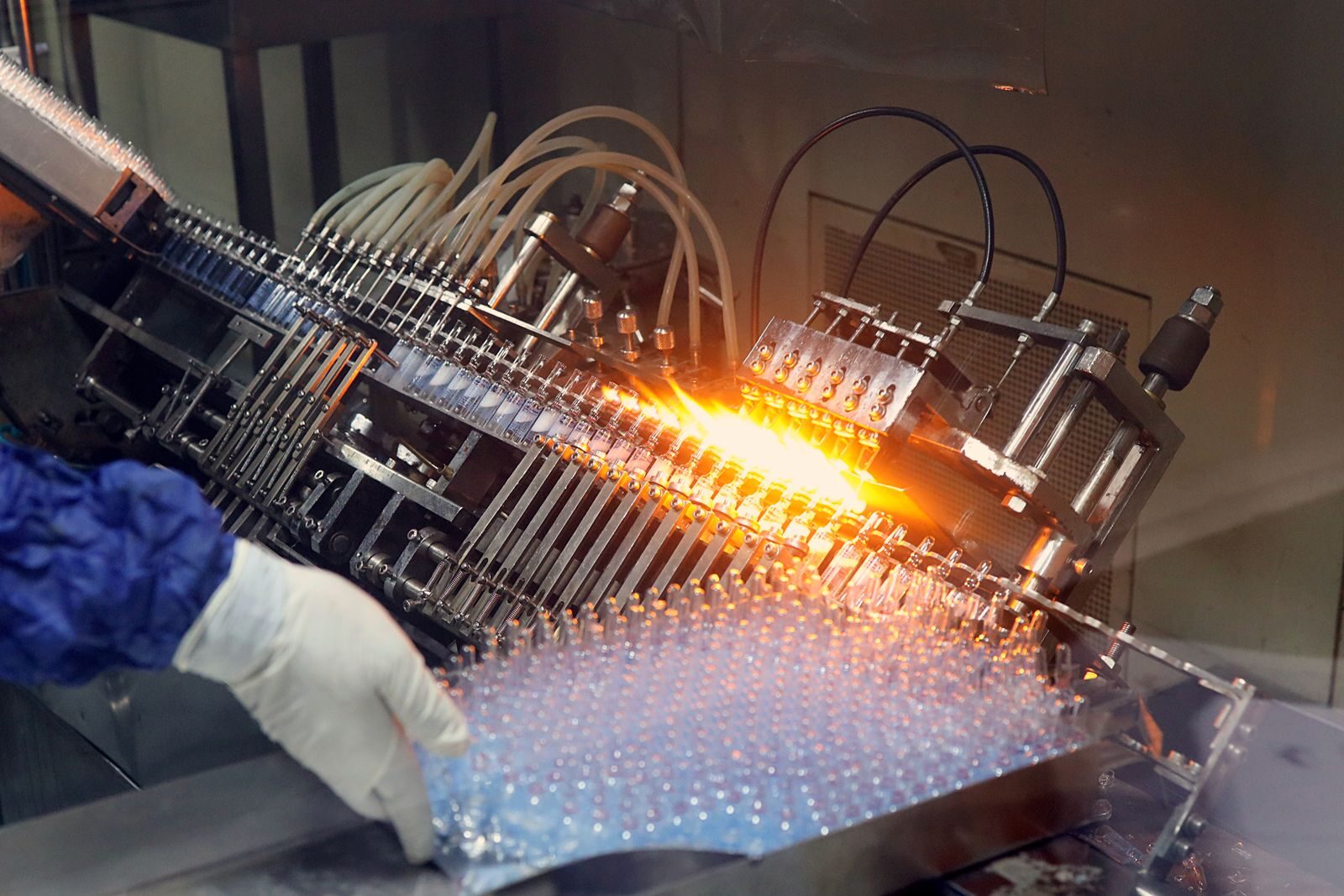
Technology partnerships in pharmaceutical manufacturing: plant design concepts as the basis for stable packaging processes
In pharmaceutical secondary packaging, product quality, process reliability and regulatory requirements must be taken into account within defined and documented procedures. The requirements vary depending on the medicinal product, packaging format and batch size. Both smaller project and trial batches and commercial production volumes require a coordinated technical infrastructure and appropriate control mechanisms.
For contract packaging companies, the challenge lies in combining these requirements with cost-effective process design. In addition to the design of the packaging lines, the selection of suitable equipment, the integration of in-process controls (IPC) and collaboration with experienced technology partners play a key role.
Plant engineering as the basis for standardised packaging processes
For Complex Pharmaceuticals’ new site in Traiskirchen, near Vienna, the technical equipment is a key component of production planning. When selecting plant and system components, particular consideration must be given to process stability, format flexibility, the handling of different packaging materials and the integration of quality-related controls.
The planned technology portfolio includes equipment from established manufacturers in the pharmaceutical packaging industry, including Uhlmann Pac-Systeme and Bausch+Ströbel.
The plant engineering to be deployed is intended to facilitate the processing of different product and packaging configurations within defined process parameters. The following aspects are particularly relevant in this regard:
- Optimised process parameters: Suitable machine designs and format components support reproducible processes for feeding, labelling and packaging.
- Integrated in-process checks: Sensors and optical inspection systems can assist in checking selected characteristics, such as completeness, positioning and labelling quality, directly within the packaging process.
- Gentle handling: Tailored feeding and transport mechanisms can help to reduce mechanical stress on sensitive primary containers such as vials, cartridges and pre-filled syringes.
- Format flexibility: Modular systems and optimised format changes support the processing of different pack variants and batch sizes.
The specific checks and process parameters used depend on the product in question, the packaging process and the applicable quality requirements.
Process efficiency and scrap during operation
The efficiency of a packaging line is influenced, amongst other things, by its availability, its process throughput and the quality of the units produced. Overall Equipment Effectiveness (OEE) combines these factors into a single performance indicator.
In addition to the technical performance of the equipment, format changes, start-up phases, material supply and process controls also affect efficiency. In the case of high-value or sensitive pharmaceutical products, it is also essential to minimise material losses and rejected packs as much as possible.
The specific impact of the respective measures depends on the particular plant configuration, the product and the operational conditions. A systematic analysis of set-up times, downtime and scrap can help to identify potential for improvement during ongoing operations.
Qualification and validation as part of plant integration
In addition to the technical characteristics of a packaging line, its qualification, the necessary validation activities and the documentation of the relevant processes are crucial. Established plant designs and standardised interfaces can support technical integration. The actual scope of the qualification and validation measures depends on the intended use, the system configuration and the applicable regulatory requirements.
For computerised systems – depending on their function and their GxP-relevant use – appropriate measures must be put in place to ensure data integrity and controlled data processing. Guidelines such as GAMP 5 can serve as a framework for a risk-based approach.
For contract manufacturing clients, this gives rise to several relevant considerations:
- Plannable technical preparation: Early coordination of product requirements, formats, interfaces and process data can support the preparation for the start of production.
- Coordinated maintenance concepts: Defined maintenance and spare parts processes can contribute to plant availability.
- Traceable documentation: Structured process and system documentation supports the traceability of quality-related procedures.
- Integration into existing customer systems: Technical integration and data exchange are coordinated in accordance with the agreed interfaces and responsibilities.
Conclusion: Integrating technology, process design and quality requirements
High-performance secondary packaging is based on the interplay of suitable and efficient plant technology, well-defined processes and effective controls. Selecting the right technology partners forms an important foundation for this. Equally important are well-thought-out format design, predictable changeover processes and technical integration tailored to the specific product.
Operational production is scheduled to commence at Complex Pharmaceuticals’ Traiskirchen site from Q1 2027. The technical equipment and the preparation of the packaging processes are intended to facilitate the handling of different product configurations and batch sizes whilst meeting defined quality and documentation requirements.
Christoph Reinwald, General Manager at Complex Pharmaceuticals, describes the requirements for modern packaging systems as follows:
“Today, there is a demand for production systems that can scale up quickly, enable short changeover times and meet the market’s wide-ranging requirements cost-effectively.”
This statement underlines the importance of a technical infrastructure that combines process stability with adaptability. It is crucial to align technical capabilities with the respective product requirements, quality specifications and operational conditions.
It is precisely this bridge between technological precision and flexible adaptation to the market that Complex Pharmaceuticals builds.
Are you looking for a contract manufacturing partner with state-of-the-art plant technology for your products from 2027 onwards?