Flexible rather than dependent – an interview on industrial sovereignty
Supply shortages of pharmaceutical products have triggered a fundamental debate: How much industrial self-reliance does Europe need to permanently secure the supply of medicines to its patients?
Christoph Reinwald, General Manager of Complex Pharmaceuticals, and Pia Fischer-Windsteig, Head of Quality Management & PV, on sovereignty, modular production models and the question of why proximity of location is a strategic factor today.
“In a world where medical needs often arise rapidly and with high specificity, rigidity is our greatest risk.” Pia Fischer-Windsteig
Drug shortages are now considered a structural problem. At what point does supply security become, in your view, a matter of political and industrial sovereignty?
Pia Fischer-Windsteig: We reach the critical point of sovereignty precisely when we lose the capacity for immediate self-direction. In the past, we prioritised efficiency over resilience, concentrating production at a small number of global sites and in huge volumes. Sovereignty today does not mean doing everything ourselves, but having the flexibility to produce small batches and specialised formats regionally at any time. Political frameworks are the foundation, but without the technological infrastructure and expertise directly on site, Europe remains reactive rather than sovereign. We must begin to understand industrial competence as part of our essential public services.
Complex Pharmaceuticals has deliberately chosen production close to Vienna. Why is proximity of location more than a logistical decision in the pharmaceutical sector today?
Christoph Reinwald: Proximity of location does not only mean shorter pathways. It also concerns better access to qualified specialists and good infrastructural connectivity. In Traiskirchen, the site was also designed so that plant structure, material flow and digital data flow are coordinated with one another from the outset.
Modular production lines promise flexibility. What significance does this adaptability have when medical
needs change faster than classical supply chains can respond?
Pia Fischer-Windsteig: In a world where medical needs often arise rapidly and with high specificity, rigidity is our greatest risk. Modular production lines are the answer to the end of the ‘one-size-fits-all’ era. Take highly specialised therapies or rare diseases: classical large-scale facilities are of no help here. In Traiskirchen, we have reversed the industrial logic. Through tool-free, automated format changes, we make the seemingly impossible possible: economic viability even for the smallest batches. This agility means that in an emergency, we save weeks of changeover time. We no longer merely react to the market — we keep pace with the speed of medical innovation.
“Efficiency must not come at the expense of data integrity or regulatory conformity.” Christoph Reinwald
Pharmaceutical manufacturing is highly regulated and simultaneously cost-intensive. Where is the line, in your view, at which efficiency must no longer come at the expense of quality or patient safety?
Christoph Reinwald: Efficiency must not come at the expense of data integrity or regulatory conformity. That is why all batch data at Complex Pharmaceuticals is centrally prepared and released — no manual data entry takes place at the lines themselves. All production and control data flow together in a centrally networked system. Key figures and batch documentation are generated automatically. This creates transparency and ensures consistently compliant documentation.
Europe is engaged in an intensive debate about resilience in healthcare. What role can new production models play in permanently reducing dependencies?
Christoph Reinwald: New production models can help to bring certain steps of the value chain back closer to the European market. If secondary packaging is designed flexibly and different batch sizes can be processed economically, this increases the scope for action within existing supply chains.
What decisions need to be made today so that industrial healthcare infrastructure also inspires confidence in times of crisis?
Christoph Reinwald: The decisive factor is structural decisions in the planning of sites and facilities. Material and process flow, as well as digital data flow, must be conceived in an integrated manner. Automation, central batch preparation and continuous data integration create the foundation for flexible yet GMP-compliant production. Such investments have long-term effects and, in my view, form the basis of robust industrial infrastructure.
This interview was published in the magazine Austrian Business Woman.
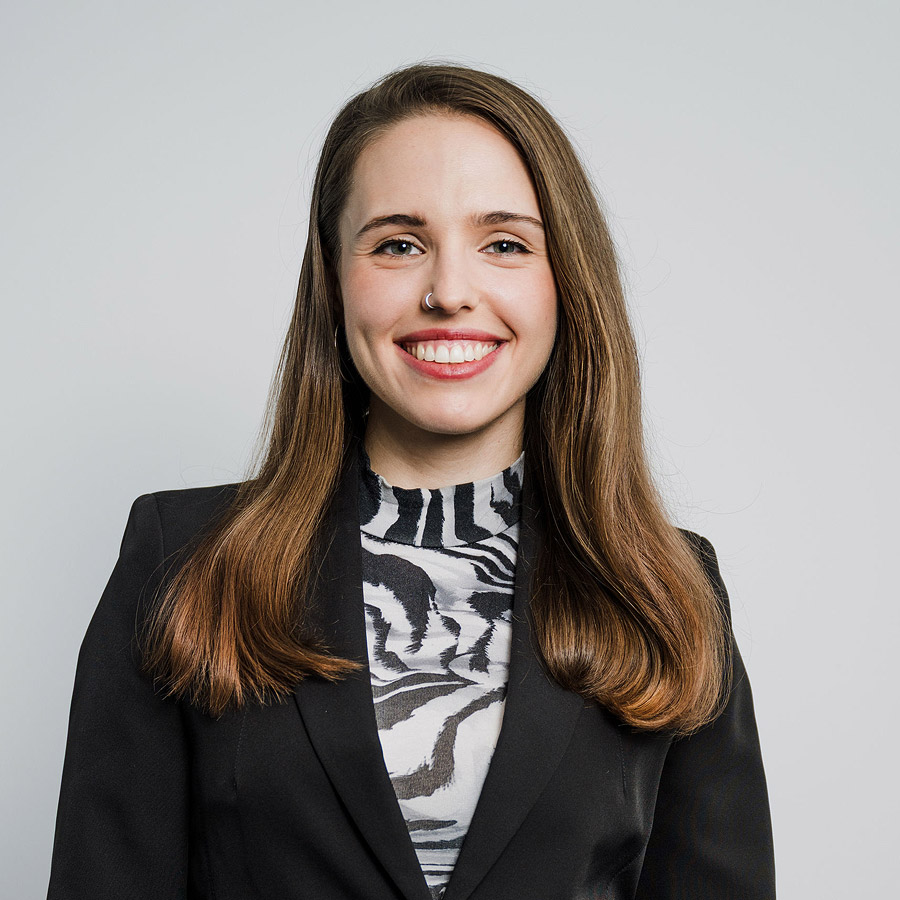
Pia Fischer-Windsteig
Lead Quality Management, Lead Pharmacovigilance, Lead Medical Affairs
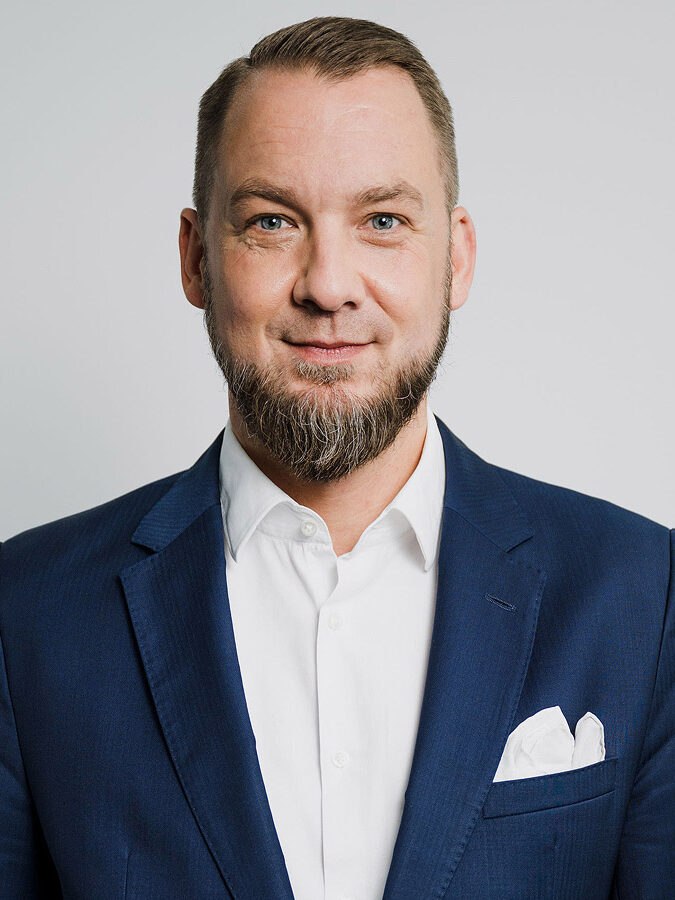
Christoph Reinwald
General Manager, Qualified Person