
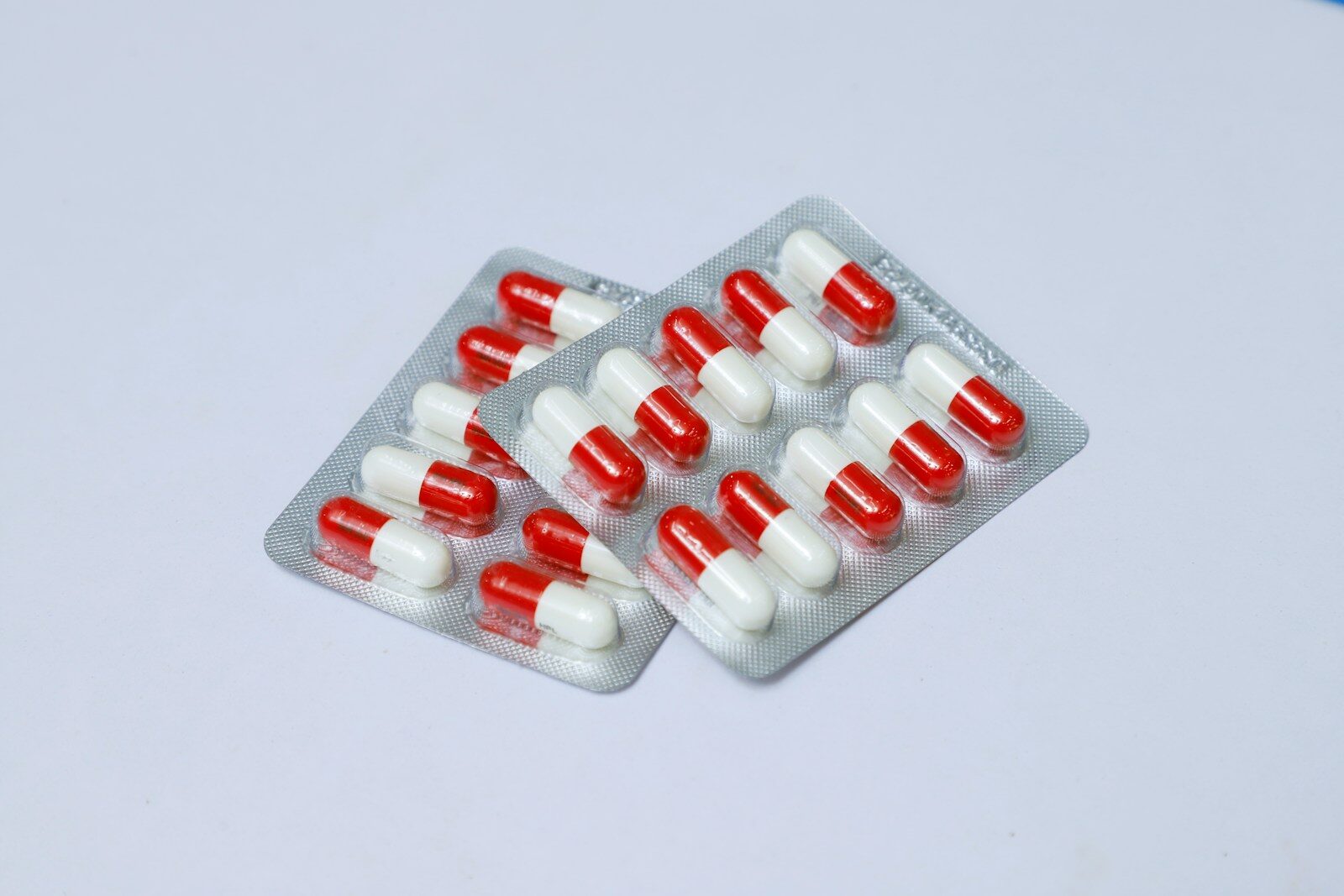
Sustainability in pharmaceutical secondary packaging: How pharmaceutical companies can reduce plastics and CO₂
Sustainability is also becoming increasingly important in the pharmaceutical packaging industry. Product protection, the integrity of primary containers and compliance with strict GMP requirements remain the foundation of pharmaceutical packaging processes. At the same time, material efficiency, recyclability and the optimisation of logistics processes are moving more into focus.
Secondary packaging in particular offers opportunities to further develop existing packaging concepts with regard to material use and transport volume. The aim is to reconcile ecological and economic aspects with the requirements for product protection, quality and process stability.
In this article, we show the potential that innovative packaging concepts, alternative inlay materials and optimised packaging dimensions offer for resource-efficient pharmaceutical secondary packaging.
The aim: product protection, material efficiency and process reliability
The packaging of medicines is subject to high requirements for quality and safety. Moisture protection, light protection, mechanical protection and, where applicable, tamper-evidence requirements must be taken into account when developing and selecting suitable packaging solutions.
The further development of sustainable packaging concepts therefore requires a differentiated view of the respective packaging level. Secondary packaging in particular offers several starting points:
Inlay materials: Plastic trays, for example made of PVC/PVDC or PET, can be replaced by precisely fitting carton inlays in suitable applications. Such solutions are suitable for vials, pre-filled syringes and injection systems, among other things. What matters here are secure product fixation, sufficient mechanical stability and reliable processing on the packaging lines.
Material minimisation: Optimising the grammage of folding cartons and package leaflets can help to reduce material use. The required stability, protective function and legibility must still be guaranteed.
Volume optimisation: A design of the secondary packaging that is tailored to the product makes it possible to reduce unneeded packaging volumes. This creates the conditions for more efficient pallet utilisation and for optimising the transport effort per packaging unit.
Modern packaging technology as the basis for alternative material concepts
The further development of plastic packaging towards carton-based solutions offers opportunities to reduce the use of fossil-based plastics within secondary packaging.
Carton inlays and alternative tray concepts in particular can help to simplify the material composition and to create the conditions for improved recyclability.
Besides the choice of material, the technical integration into existing packaging processes is above all decisive. The packaging materials used must ensure reliable feeding, positioning and processing and at the same time guarantee the required process stability.
For this purpose, Complex Pharmaceuticals relies on a combination of plastic and carton processing. The modular packaging lines make it possible to process different pharmaceutical formats and packaging structures.
With three feeding sections and six feeding systems, even complex hybrid products such as ampoules, vials, syringes and pens can be processed. Twin-Speed technology also enables the parallel and independent processing of different product streams as well as flexible format changes.
In addition, digital process control systems such as SmartControl as well as serialisation and aggregation solutions ensure end-to-end traceability. Re-feed mechanisms and intelligent reject systems support targeted waste minimisation and gentle product handling.
Energy efficiency in pharmaceutical packaging infrastructure
Sustainability considerations do not end with the choice of packaging materials. The energy efficiency of the production site also influences the resource requirements of pharmaceutical packaging processes.
At the Complex Pharmaceuticals site in the Logistik Park Tribus in Traiskirchen, this aspect is already taken into account in the planning of the infrastructure and equipment. The main lines have a compact design with a line length of approx. 10.95 metres. The reduced equipment length enables efficient use of the available production area and contributes to optimising energy demand.
Digital control systems and a high level of overall equipment effectiveness support efficient operation. Modular expansion options and retrofittable technologies also take the long-term usability of the equipment into account.
Modern building and storage technology
The storage infrastructure is also designed for resource-conserving operation. Energy-efficient cooling technology and modern building services help to maintain the required storage conditions.
The high-bay warehouse offers storage capacity for different temperature ranges and thus the prerequisites for storing pharmaceutical products according to demand. Currently, 4,500 pallet positions in the ambient area at 15 to 25 °C and 1,000 pallet positions in the refrigerated area at 2 to 8 °C are provided for.
In addition, an expansion of the storage capacity by a further 10,000 pallet positions in the ambient area is planned. The implementation of this additional capacity is scheduled for spring 2027.
Digital control and monitoring systems also ensure the traceability of stock and support efficient storage and order-picking processes.
Sustainable secondary packaging under the pressure of new regulations
The requirements for packaging solutions are changing. With the EU Packaging and Packaging Waste Regulation, PPWR (Regulation (EU) 2025/40), which has applied since 12 August 2026, topics such as packaging minimisation, recyclability and efficient use of materials are gaining further importance.
In the pharmaceutical industry, too, there is increasing discussion of how secondary packaging in particular can be optimised in terms of material consumption, packaging volume and CO₂ emissions. This is not only about using alternative materials, but also about intelligent packaging designs, efficient use of transport capacity and avoiding unnecessary packaging components.
At the same time, special requirements apply in pharmaceutical production: product protection, stability, quality and patient safety must be ensured at all times. Sustainable packaging concepts must therefore reconcile ecological and economic aspects with regulatory and product-specific requirements.
Complex Pharmaceuticals pursues this approach through the further development of material-efficient packaging solutions, the use of suitable carton and mono-material concepts and the optimisation of packaging processes. The aim is to use resources more efficiently and to take customers’ requirements for modern pharmaceutical packaging solutions into account.
Christoph Reinwald, General Manager at Complex Pharmaceuticals, describes the approach:
“Sustainability in the pharmaceutical environment must be consistent with process stability and efficiency. By using suitable packaging material concepts and energy-efficient equipment technology, we create the conditions to optimise resource consumption while taking our customers’ requirements along the entire supply chain into account.”
Your partner for pharmaceutical secondary packaging
Implementing sustainable packaging concepts requires, in addition to suitable materials, above all the right technical infrastructure and experience in pharmaceutical contract packaging.
Complex Pharmaceuticals combines flexible packaging technologies with digital process control and a storage and production infrastructure geared to pharmaceutical requirements.
Our services include the processing of different primary containers and drug delivery devices, individual packaging concepts and the integration of suitable carton and plastic solutions.
Are you looking for a contract partner who implements sustainable packaging concepts efficiently on your lines?